National Assembly Urged to Include Sango, Ogun in Oath of Office
- Historian Toyin Falola urged the National Assembly to incorporate Yoruba deities Sango and Ogun into the oath of office for public officials to fight corruption
- Falola made the call while delivering a keynote lecture at the inauguration of the Alaafin Institute of Yoruba Studies at Emmanuel Alayande University of Education, Oyo
- The professor clarified he was not calling for a return to pre-colonial rule but urging policymakers to draw from indigenous African political philosophy
PAY ATTENTION: Find it fast with our new search feature at Legit.ng!
Legit.ng journalist Adekunle Dada has over 8 years of experience covering metro, government policy, and international issues
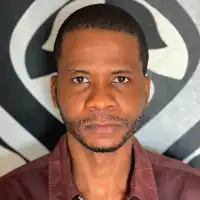
Oyo State - Historian and Professor of African Studies Toyin Falola has called on the National Assembly to embed invocations of the Yoruba deities Sango and Ogun into the oath of office taken by public officials.
He argued that spiritual accountability rooted in indigenous tradition could succeed where decades of constitutional safeguards have fallen short.


Source: Facebook
Falola made the proposal on Tuesday while delivering the keynote lecture, "Yorùbá Mythologies and Their Relevance Today."
As reported by The Punch, Falola stated this at the inauguration of the Alaafin Institute of Yoruba Studies at Emmanuel Alayande University of Education in Oyo.
"To decolonise corruption, impunity and abuse of office, what prevents our National Assembly from incorporating the nemesis of Sango into the Oath of Office for all, regardless of their religious faith?"
"I wonder if any Nigerian politician could withstand the wrath of Ogun and Sango as they would violate with impunity the letters and spirit of the Western laws!"
Why Western law is not enough
Falola maintained that Nigeria's governance failures stem not from a lack of institutional frameworks but from an absence of moral and cultural grounding in leadership.
He noted that successive rounds of constitutional reform, electoral adjustment and institutional restructuring had consistently addressed institutional design while leaving the ethical foundations of governance untouched.

"The conventional prescription is to reinforce formal institutions, develop legal frameworks based on Western constitutional democracy and improve transparency. It must happen. All of it. None of it is enough."
He further argued that Western constitutional democracy is not culturally neutral, having emerged from specific European historical conditions involving social contract theory, natural rights and liberal individualism — conditions that do not translate seamlessly into societies with fundamentally different assumptions about individuality, community and authority.
What Yoruba political tradition offers
Falola pointed to pre-colonial Yoruba governance as a model that treated leadership as conditional on ethical conduct rather than as a permanent entitlement.
He cited practices such as the council's power to invite a king to "open the calabash," a ritualised process that effectively ended a ruler's reign when communal welfare demanded it.
"These were not ideal systems. No system is. But they embody a political understanding about the link between power and responsibility that the post-colonial Nigerian state has spectacularly failed to institutionalise."
He was careful to draw a distinction between studying these traditions as political philosophy and advocating for their literal restoration.

According to Falola, engaging indigenous political thought means grappling with core values — responsibility, reciprocity and the moral foundations of power — and testing whether they can function within modern institutional structures.

Source: Facebook
Abaribe allegedly made to swear oath
Recall that Senator Enyinnaya Abaribe revealed a secret about his time as the deputy governor of Abia State.
The Abia South senator claimed he was made to swear an oath of loyalty to the then governor, Orji Uzor Kalu.
This was disclosed by the politician in his book 'Made in Aba ’, which was launched in Abuja.
NDC exempts Obi, Kwankwaso from anti-defection oath
Meanwhile, Legit.ng also reported that the Nigeria Democratic Congress (NDC) excluded its presidential candidate, Peter Obi, and his running mate, Rabiu Kwankwaso, from a newly introduced anti-defection oath requirement.
The party’s National Secretary, Ikenna Enekweizu, disclosed the exemption during an interview on Channels Television.
The NDC said the oath is primarily aimed at preventing elected lawmakers at the national and state assembly levels from defecting after elections.
Source: Legit.ng