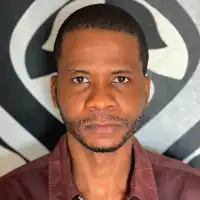
Former Governor Reveals Why Plateau Crisis Has Lasted Over 2 Decades
- Former Plateau State Governor Jonah Jang addressed the root causes of the state's decades-long crisis in a newly launched book
- Jang pointed to failures of leadership, unresolved identity questions, and ignored grievances as key factors behind the persistent violence
- The former governor called for healing and reconciliation alongside security measures to end the crisis that has killed hundreds since 2001
PAY ATTENTION: Find it fast with our new search feature at Legit.ng!
Legit.ng journalist Adekunle Dada has over 8 years of experience covering metro, government policy, and international issues
Jos, Plateau State - Former Plateau State Governor Jonah David Jang has spoken out on why the violent crisis that has gripped the state for more than two decades has been so difficult to resolve.
Jang blamed leadership failures and deep-rooted governance gaps for the continued bloodshed.

Source: Facebook
As reported by Daily Trust, Jang made the remarks in his new book, 'From Airman to Politics: My Life', which was unveiled in Jos on August 1, 2026.

The book offers his personal account of the crisis that has claimed hundreds of lives and destroyed property worth millions of naira across several communities in Plateau State since 2001.
Identity, land and belonging at core
According to Jang, the violence did not begin with weapons but with unaddressed grievances that hardened over time.
"The Plateau crisis is about identity, land, justice and belonging. Long before the bombs, machetes and the mass burials, there were subtle signs: grievances left unaddressed, tensions ignored, rights denied and injustice institutionalised."
He argued that the central question dividing communities was one of belonging: who had the right to land, who could stand for election, and who was considered a true son or daughter of Plateau State.
"These questions festered in silence until they erupted into bloodshed."
The former governor, who also served as military governor of both Benue and Gongola states, described the crisis as both a historical and man-made tragedy.

In his view, it was a situation that had been building for decades but was allowed to spiral because of repeated failures in leadership at various levels of government.
Jang calls for reconciliation over security alone
While Jang acknowledged the role of security in managing the crisis, he insisted that force alone cannot end it.
He called on authorities to return to fundamental questions about what it means to hold Plateau citizenship and how land, power and opportunity can be shared fairly among all communities.
"What Plateau needs and still needs is not just security but healing as well. Not just reconstruction, but reconciliation as well."
He also placed some blame on administrations that came after his own tenure, describing their response to the crisis as falling short of the decisive action he believed was required.
Jang's book comes at a time when communities in Plateau State continue to grapple with recurring attacks and displacement, with the violence remaining one of the most persistent security challenges in Nigeria's north-central region.
According to The Punch, Jang’s autobiography chronicles his journey from a career in the Nigerian Air Force to public service and politics, detailing his experiences in governance and leadership.

The foreword to the book was written by former President Goodluck Jonathan.

Source: Original
Patterns sustaining Plateau’s war, rural insecurity
Recall that violence in Jos and across Plateau state no longer arrives as a rupture. It has become a rhythm.
What headlines describe as “attacks” are, in truth, surface tremors of a deeper insecurity, patterned, adaptive, and quietly sustained.
Between 2023 and 2024, UNICEF recorded hundreds of deaths, including children, and more than fifteen thousand displaced into camps and host communities. Beyond isolated tragedies, these are signals of a system in operation.
Nigerian Army: What is fuelling Plateau crisis
Meanwhile, Legit.ng also reported that the Nigerian Army commented on the crisis and tension rocking different communities in Plateau State.
Major General MA Etsy-Ndagi, Chief of Civil-Military Relations, mentioned the major thing fuelling the crisis in the north-central state.
According to Etsy-Ndagi, the crisis between farming and herding communities is a cycle of violence.
Source: Legit.ng