Doctor Who Treated Dele Giwa Discloses His Last Words After Parcel Bomb Attack in 1986
- A doctor who was on duty when Dele Giwa was rushed to hospital after the 1986 parcel bomb attack shared what the journalist said in his final moments
- The account was given at the Lagos launch of a book about Giwa's journalism career, attended by alumni of Newswatch Magazine
- The doctor also revealed that Giwa repeatedly asked about his wife and youngest daughter while receiving treatment at the hospital
PAY ATTENTION: Find it fast with our new search feature at Legit.ng!
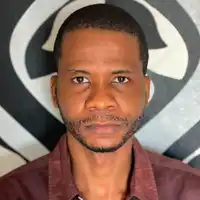
A medical doctor who attended to Dele Giwa at the hospital on the day of his assassination has spoken publicly about the founding editor-in-chief of Newswatch Magazine's final moments, nearly four decades after his death.
Dokun Adedeji made the disclosure on Monday, October 19, 2026, at the Nigerian Institute of Journalism (NIJ) in Lagos, during the launch of a book titled *Dele Giwa's Granite Journalism*.

Source: Twitter
As reported by TheCable, the event was organised by alumni of Newswatch Magazine to honour the late journalist, whose writings for Daily Times, Sunday Concord, and Newswatch are compiled in the volume.

Giwa was killed on October 19, 1986, when a parcel bomb detonated at his home in Ikeja, Lagos, during the military administration of Ibrahim Babangida.
Giwa's final hours at the hospital
Adedeji, who was the doctor on duty that weekend, said a company bus arrived at First Foundation Medical Centre in Opebi, Ikeja, around 12:30 pm carrying the injured journalist.
"I saw people running, saying, 'they brought Dele Giwa,'" he recalled. "What I saw, I have never seen again since in my practice. He was shattered. His two limbs were open, and he was bleeding."
Despite the severity of his wounds, Giwa was still conscious when he arrived.
"He said, 'Dokun, se mi o ni ku sha? (I hope I will not die?).' I said, 'I don't know,'" Adedeji recounted.
The doctor said Giwa did not want to die and appeared determined to pull through, but added that survival would likely have been impossible given the extent of the injuries.
Giwa died around 1 pm. Adedeji said he kept the blood-stained clothes and shoes he wore that day for five years as a reminder of what had happened.

Throughout his time at the hospital, Giwa repeatedly asked about his wife, Funmi, and his youngest daughter, Aisha, who had crawled into the dining area after the explosion.
"How is Aisha? Do you know anything about Aisha?" he asked, according to the doctor.
The events that preceded the attack
Giwa was 39 years old when he was killed. He had built a reputation as a fearless investigative journalist whose work consistently scrutinised those in power.
His death came two days after he appeared at the State Security Service (SSS) headquarters on October 16, 1986. He had been questioned over an allegation that he was heard discussing arms importation.
He had also written a piece on the Central Bank of Nigeria's second-tier foreign exchange market (SFEM) policy, warning that if the policy failed, people would stone "their leaders in the streets."
On October 18, Halilu Akilu of the then-Directorate of Military Intelligence (DMI) called Giwa's home and asked his wife for directions, saying he planned to stop by.
The following morning, Akilu called again and told Giwa the matter had been resolved. Shortly after, a package was delivered to the journalist's residence.

Newswatch's London bureau chief, Kayode Soyinka, who was with Giwa at the time, narrowly escaped the blast after stepping away to use the restroom.
Giwa would have turned 79 this year.
Did Ibrahim Babangida kill Dele Giwa in 1986?
Meanwhile, Legit.ng also reported that former military president Ibrahim Babangida refuted allegations linking him to the 1986 assassination of Dele Giwa, blaming media sensationalism for obstructing the investigation.
Giwa, a critic of Babangida’s regime, was accused of plotting a socialist revolution before receiving a parcel bomb at his home.
Babangida, in his autobiography, maintained that the case remains unsolved and expressed hope that the truth would eventually be uncovered.
Source: Legit.ng